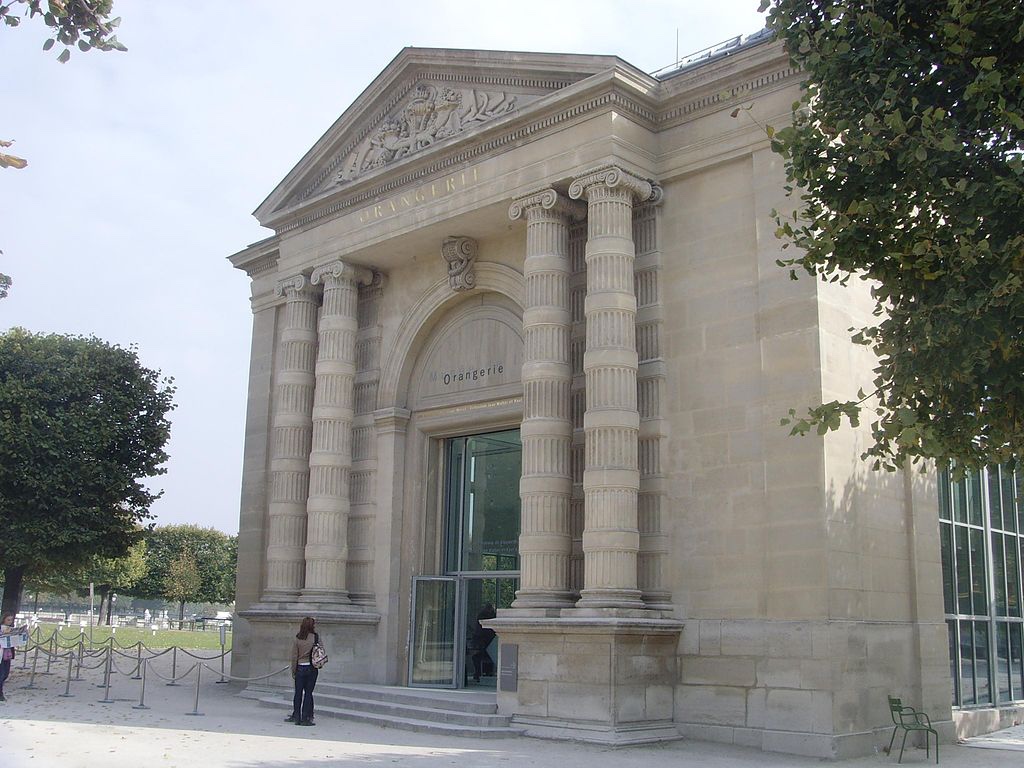
The Orangerie Museum is an art museum located in the Tuileries Gardens in Paris, France. The museum is famous for its collection of impressionist and post-impressionist paintings, including works by Claude Monet, Pierre-Auguste Renoir, Paul Cézanne, Henri Matisse, and Pablo Picasso.
The building that now houses the museum was originally built in 1852 by the architect Firmin Bourgeois as an orangery for the Tuileries Palace, which was the residence of the French royal family. The orangery was used to protect citrus trees during the winter months, hence its name.
In 1921, the French government decided to convert the building into an art museum. The museum was designed by the architect Camille Lefèvre and opened to the public in 1927. The museum’s collection was initially focused on 19th-century French painting, but it was expanded in the 1930s to include works by international artists.
During World War II, the museum’s collection was evacuated to various locations for safekeeping, and the building was used as a storehouse for furniture from the Louvre Museum. After the war, the collection was returned to the Orangerie, and the museum resumed its role as a showcase for modern art.
The most famous works in the Orangerie’s collection are Monet’s “Water Lilies” series, which he painted in the gardens of his home in Giverny. The museum has two oval-shaped rooms specifically designed to display these paintings. The rooms were designed by Monet himself, and he envisioned them as a place where visitors could experience the sensation of being surrounded by nature.
Today, the Orangerie Museum is part of the Musée d’Orsay network, which also includes the Musée d’Orsay and the Musée de l’Orangerie, and is one of the most popular museums in Paris.
 CitySpotlights™