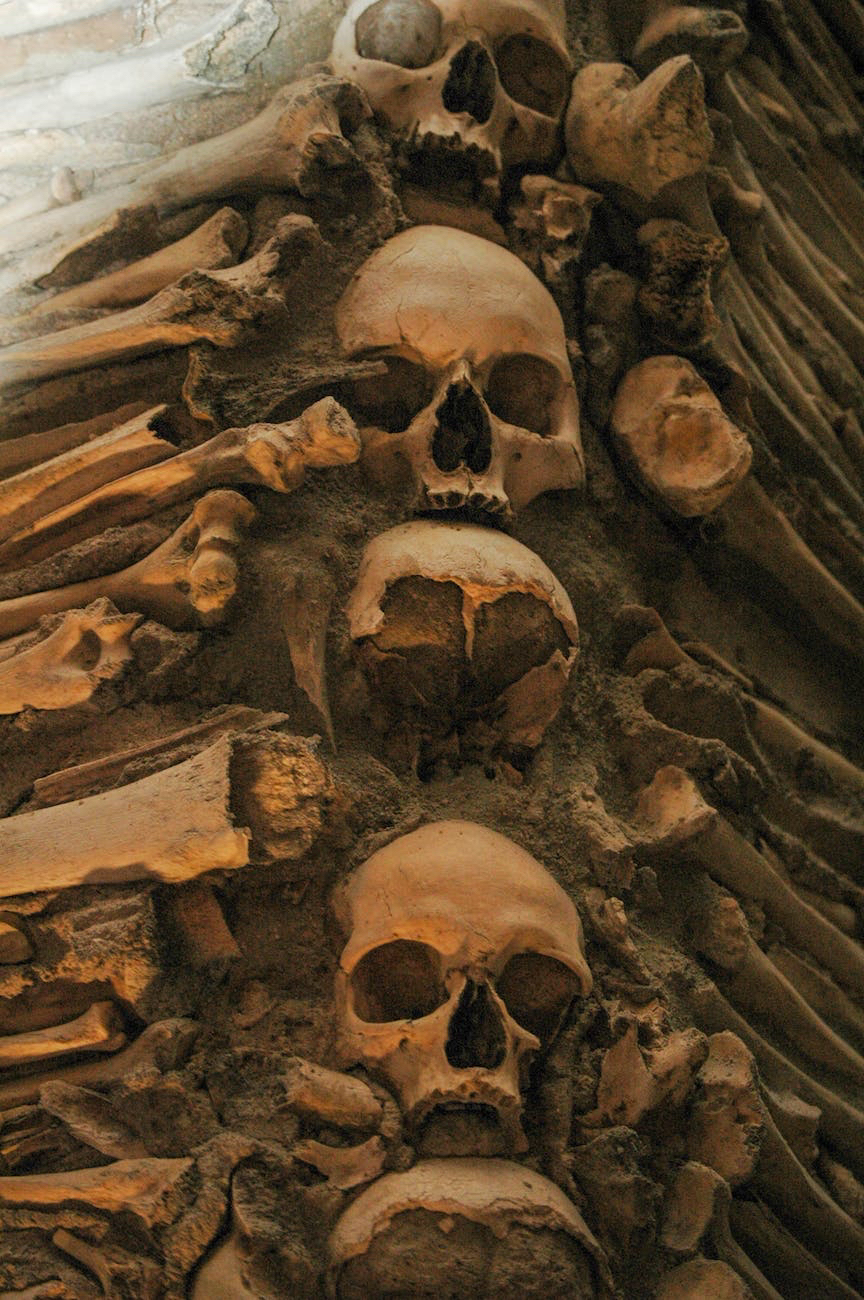
The Catacombs of Paris are an underground ossuary located beneath the streets of Paris, France. The ossuary is a network of tunnels and chambers that contain the remains of more than six million people, making it one of the largest burial places in the world.
The Catacombs of Paris were created in the late 18th century as a solution to the problem of overcrowded cemeteries in Paris. The city’s cemeteries had become a source of disease and pollution, and the government decided to move the remains of millions of people to the underground quarries beneath the city.
The first transfer of remains to the Catacombs took place in 1786, and it continued for several decades. The remains were transported in carts and arranged in the tunnels and chambers in a way that resembled the layout of cemeteries above ground. The bones were stacked in neat rows and arranged in patterns, and some of them were used to create decorative features such as arches and columns.
During the French Revolution, the Catacombs of Paris became a place of political and social unrest. The tunnels were used by revolutionaries as a meeting place and a hideout, and some of the chambers were used as a makeshift prison. The Catacombs also played a role in the Paris Commune of 1871, when the communards used the tunnels to resist the government.
In the 19th and 20th centuries, the Catacombs of Paris became a popular tourist attraction. Visitors were allowed to explore some of the tunnels and chambers, and the ossuary was seen as a macabre but fascinating reminder of Paris’s past.
Today, the Catacombs of Paris are a popular tourist destination, attracting millions of visitors each year. Only a small portion of the tunnels and chambers are open to the public, but they offer a glimpse into the history and culture of Paris. The Catacombs are also an important archaeological site, and they continue to reveal new insights into the history of Paris and its people.


 CitySpotlights™